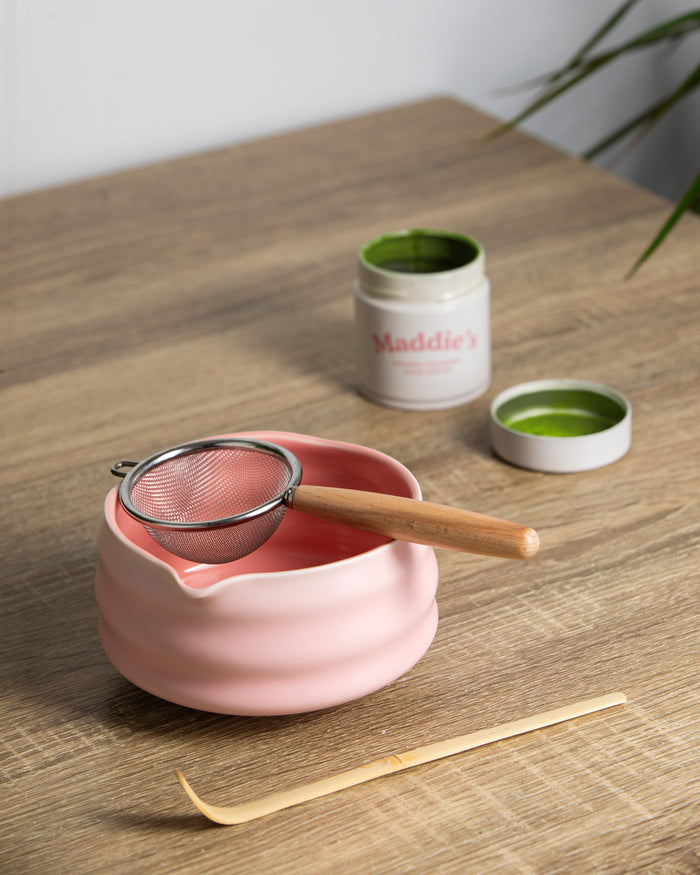
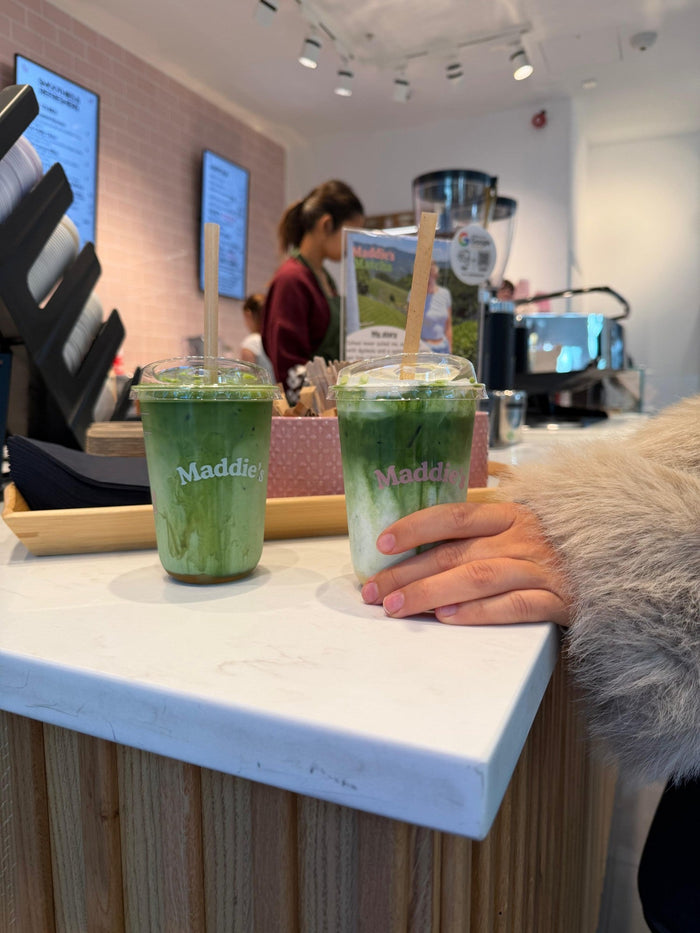
We serve both at our Gunwharf Quays café, matcha whisked to order and coffee from our partner roaster, so we get asked this every day: what is the difference, and which should I have? Here is the honest answer, with no miracle claims, just how the two compare.
The short answer
| Matcha | Coffee | |
|---|---|---|
| Caffeine | About 70mg per serving | Often quoted at around 95mg in a cup of brewed coffee |
| How it feels | A slower, steadier lift | A quicker, brighter lift |
| Taste | Fresh, grassy, gently sweet | Roasted, rich, full-bodied |
| What you are drinking | The whole tea leaf, stone-milled to a powder | Roasted beans brewed with water |
| Making it at home | Sieve, bamboo whisk, about 3 minutes | Machine, cafetière or pods |
Caffeine: similar amount, different feel
A serving of our ceremonial matcha has about 70mg of caffeine, a little less than a typical cup of brewed coffee. So matcha is not caffeine-free, and it is not a weak alternative either.
The difference people notice is in how it arrives. Matcha also contains L-theanine, an amino acid found naturally in tea leaves, and many matcha drinkers find the caffeine comes on more slowly and lasts more steadily. Coffee's lift tends to arrive faster, which is exactly why so many people love it first thing.
Why we love both
Coffee is a big part of our café, and we are proud of what our partner roaster brings to the counter. Matcha is the other half of the story. For a lot of us at Maddie's, matcha is what we reach for when we want a comfortable, steady boost through a busy day.
It is not about giving anything up. Plenty of people have a flat white one morning and an iced matcha the next. If you have never tried a properly made matcha, it is well worth adding to your rotation.
Taste: what to expect
Good ceremonial matcha tastes fresh and grassy, smooth rather than bitter, with a natural sweetness. Ours is a first harvest Okumidori from Mie, Japan, stone-milled, with 0 added sugar. If you have only tried cheap matcha before, a ceremonial grade will surprise you.
If you enjoy a milky coffee, start with a matcha latte. The milk softens the flavour, and a little honey helps while your taste gets to know it.
Trying matcha for the first time
- Add one matcha to your week and see how you like it.
- Start with a latte, hot or iced, rather than matcha with just water.
- Get the basics right. Sift it, use water at about 75°C, and whisk in a quick M shape until it is foamy. Our step-by-step guide covers it all.
- Use a ceremonial grade. It is what makes matcha taste smooth instead of bitter.
What matcha will not do
You will see plenty of big promises about matcha online. We will not make them. Matcha is not a weight loss drink and it is not a cure for anything. It is a really good drink with a gentle, steady caffeine lift, and that is reason enough.
Quick questions
Does matcha have more caffeine than coffee?
Usually a little less. A serving of our matcha has about 70mg, compared with the roughly 95mg often quoted for a cup of brewed coffee.
Why does matcha feel different from coffee?
Matcha contains L-theanine as well as caffeine, and many people find its lift feels slower and steadier. Coffee's lift tends to arrive more quickly. They are just different, and lots of people enjoy both.
Do you still serve coffee at the café?
Yes. We serve coffee from our partner roaster alongside our matcha at Gunwharf Quays, so you can have whichever you fancy.
Can I drink matcha in the afternoon?
It still contains caffeine, so treat it as you would a coffee. If caffeine late in the day keeps you up, have it earlier.
Does matcha taste like green tea?
It is made from green tea leaves, but it tastes richer and smoother than a teabag, because you drink the whole leaf, ground to a fine powder.
Ready to try it at home? Our 30g tin of ceremonial matcha makes 10 to 15 cups, and the Matcha Starter Bundle comes with everything you need.